

Asphalt Hot Mix Plant: Important Components and Their Functions
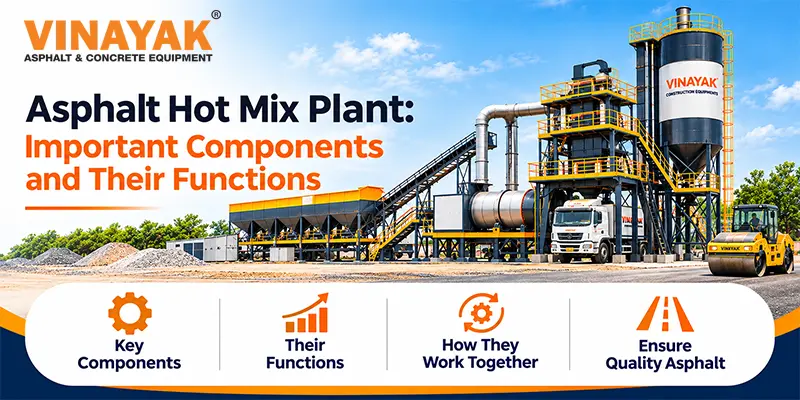
A constant supply of good asphalt is needed to construct roads with good surface quality. The manufacture of asphalt consists of various processes such as feeding of aggregates, heating, drying, screening, weighing, and mixing. These processes require various machines to ensure the production of asphalt of required quality and quantity.
An Asphalt Hot Mix Plant combines all these processes into one organised system of production. Knowing the components of the plant and their functions will help contractors choose the right equipment. Vinayak Construction Equipments provides asphalt drum mix plants and asphalt batch mix plants.
What Is an Asphalt Hot Mix Plant?
An Asphalt Hot Mix Plant is a production plant where heated aggregates, bitumen, and mineral filler are blended in proportion to produce hot mix asphalt. The final product is used in road construction, highway construction, and other forms of paving.
The process involves the use of interrelated mechanical and electrical systems. Even though the systems are different for batch mix and drum mix plants, they carry out important operations like feeding, heating, and mixing of asphalt.
Important Components of Hot Mix Plant and their Roles
Every part plays a certain role in the process of manufacturing asphalt. Knowing what roles these parts play makes one understand how the whole plant works.
1. Cold Feeder Bins
Cold feeder bins are the beginning stage of asphalt production. They serve for separate storage of aggregates of different sizes and supply them to the production process in a regulated manner.
The roles of these bins are:
- Storage of aggregates depending on their sizes.
- Regulation of the supply of raw materials.
- Rate control of the supply of aggregates to the conveyor.
- Help in aggregate proportions.
2. Conveyor system
The conveyors are used to move aggregates from the cold bins to the dryer. The conveyors help move materials from one section of the plant to another constantly.
The working conveyor system helps minimise labour in moving materials from one area of the plant to another and facilitates the production process.
3. Dryer Drum
The dryer drum works by removing moisture from aggregates and heating aggregates to the required temperature before aggregate mixing. It uses a rotating action to move and spread the aggregate while exposing it to heat.
Water removal is crucial since the presence of excessive amounts of water can lead to a reduction in the bonding of bitumen and aggregates.
4. Burner Unit
The unit acts as the source of heat required during the drying and heating processes. The unit works together with the dryer drum to ensure that the right temperatures are attained in the production process.
It can be fueled by different types of fuels depending on the kind of plant being used.
5. Screening and Hot Aggregate Bins
In the batch mix plant, the hot aggregates are transported to the vibrating screen through the hot elevator. The aggregates are sorted according to their sizes on the screens and stored in separate hot bins.
The hot bins act as temporary storage of the screened aggregates until they are required for batching.
6. Bitumen Storage and Heating Tank
Bitumen has an important function of binding material in the manufacture of asphalt. It is stored in a storage tank while heated to a certain temperature using a proper heating system.
The bitumen is then fed into the mixing system through pipes and pumps. The appropriate temperature is maintained to enable its efficient pumping and coating of aggregates.
7. Mineral Filler Feeding System
Mineral fillers are added to the asphalt for better quality of the final product. This is the field where the filler system works, as it stores and feeds the required amount to the mixer.
Controlling the feeding process will ensure that proper mixing ratios are achieved.
8. Pugmill Mixing Unit
This unit mixes heated aggregates, asphalt, and mineral filling to produce the asphalt mix.
The batch mix plants use the twin-shaft pugmill mixer for mixing materials in a specific time. The pugmill mixers in the batch mix plants produced by Vinayak are fitted with the hot oil jacketing system.
9. Pollution Control System
While producing asphalt, dust is produced through handling of aggregates and heating. This pollution control system removes the dust that is produced during the production process.
The pollution control system consists of cyclone collectors, wet dust collectors, and baghouse filters.
10. Control Panel and Control Cabin
The control panel allows the operator to control different processes in the plant. It helps coordinate the feed, temperature, weighing, and mixing processes.
Modern plants employ PLC-based systems to automate and monitor production processes.
How do these components react together?
During the manufacturing process, the aggregates are placed in the cold feeder bins. They are transported to the drum dryer to be dried while heat is added.
In the batch plants, the aggregates are transported from the drum dryers during screening to the hot bins. The quantities of aggregates, bitumen, and fillers that are needed are measured and then transported to the pugmill mixer. Mixing will take place, and the hot asphalt will be transported to the construction site. The Drum Mix plants involve the processes of drying and mixing continuously.
Conclusion
All components of the process of asphalt making are important to make sure that the product is of quality and efficient. The coordination of equipment in the process is very crucial in the process of aggregate feeding, drying, as well as weighing and mixing of the ingredients.
Various things need to be considered when selecting a good Asphalt Hot Mix Plant, which include capacity, components, level of automation, among others. Vinayak Construction Equipments provides batch and drum mix asphalt plants for road construction projects.


.png)