

Concrete Batching Plant: A Practical Guide for Modern Construction Projects
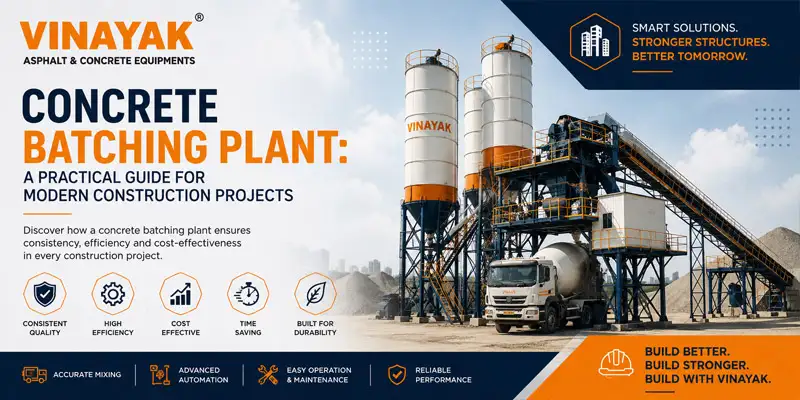
The quality of the concrete material is directly related to its compression, abrasion resistance and performance. The concrete material is vital in all types of structures, ranging from highways and bridges to commercial and residential buildings. This is why a Concrete Batching Plant is important on any construction site.
A batching plant is used to ensure accurate portioning and mixing of concrete ingredients. In addition, it reduces the need for contractors to mix concrete manually as well as help maintain uniformity in the production process.
What Is a Concrete Batching Plant?
A Concrete batching plant is an apparatus used in batching concrete comprised of aggregates, cement, water, and other admixtures. The process requires a certain ratio of the materials, which must be measured and introduced into the batching plant mixer.
Concrete batching plants are effective due to their automatic control and electronic weighing mechanisms, which enable the production of concrete in a most organised and efficient manner. This makes them perfect for large-scale developments and/or projects where concrete is required in very large quantities.
Why Is It Important for Construction?
Large construction projects cannot depend on irregular or manually prepared concrete. A reliable batching system provides better control over production and helps maintain the required mix quality.
Some key advantages include:
- Consistent batching of raw materials
- Accurate weighing and dosing
- Faster concrete production
- Reduced material wastage
- Better control over mix proportions
- Improved productivity at the project site
For projects where concrete is required continuously, these benefits can make a significant difference to project timelines and operating costs.
Stationary and Mobile Batching Solutions
The right plant depends on the nature of the project. Stationary batching plants are suitable for projects requiring regular, high-volume concrete production from a fixed location. Vinayak offers models with production capacities of 45, 60, and 75 m³ per hour.
Mobile plants, on the other hand, are useful when the construction location changes or when quick installation is important. Vinayak's mobile range is designed for easier installation, compact operation, and on-site concrete production.
Features That Matter When Selecting a Plant
Before purchasing a batching system, contractors should assess the production rate, mixer types, weighing accuracy, degree of automation, installation process, and post-sale support.
Vinayak Construction Equipments provides concrete batching plants with electronic weighing, a control panel PLC, and various configurations of mixers. Additionally, the company offers modular solutions and support services to ensure the most efficient performance of the plant.
Choosing the Right Equipment Partner
Selecting the right manufacturer is as important as selecting the plant capacity. A dependable equipment partner should understand project requirements and provide suitable technical support, spare parts, and service assistance.
Vinayak Construction Equipments has more than 23 years of experience, over 350 commissioned installations, and an export presence across more than 35 countries, according to its website.
Conclusion
A properly equipped Concrete Batching Plant can make it possible to achieve concrete of desired consistency, as well as increase the overall productivity and organisation of works. Thus, depending on the scale and specific needs of the works, one should choose between a stationary and mobile unit, as both have their advantages and disadvantages.


.png)