

Concrete Batching Plant vs Cement Batching Plant: Key Differences
For any construction project to be successful, it needs to be done with precision and consistency. Precision and consistency are crucial in the construction industry to ensure that buildings are durable and of good quality. In every type of concrete project, from a highway to a commercial building, bridge or residential development, the quality of the concrete affects the strength and durability of the building. This is where the batching plants come in handy.
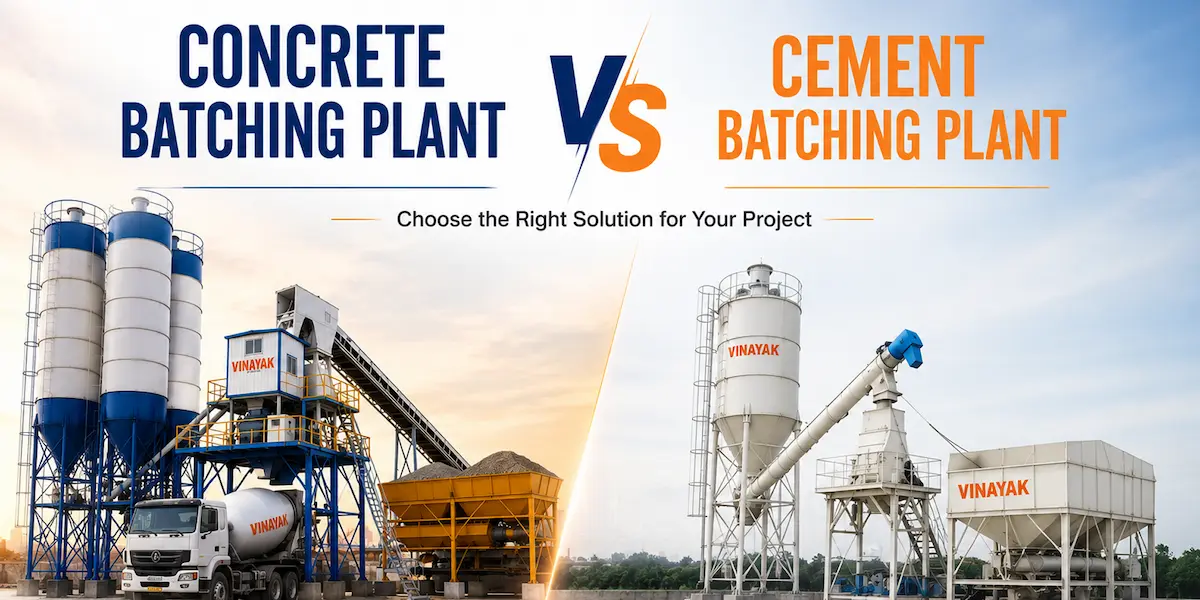
But, a lot of contractors and project managers tend to use Concrete Batching Plant VS Cement Batching Plant interchangeably. Both are associated with concrete manufacturing, but with some key differences that impact productivity, efficiency, and project results.
Introduction
The terms cement batching plant and concrete batching plant are also frequently used interchangeably; however, they have differing functions in production and on-site operations and are best suited for different production requirements and needs that include capacity, mobility and mix control.
Understanding the Basics of Each Plant
- Cement batching plant: a plant or equipment in which cement is stored and dispensed into the production line, which is normally a part of the concrete or asphalt production system.
- Concrete batching plant: It is a complete system in which various materials such as aggregate, cement, water and admixtures are mixed on site (mobile) or at a station (stationary) to create ready-mix concrete.
Key Differences: Quick Bullets
- Purpose: Cement batching plants are used for measuring/dispensing cement and concrete batching plants are used to produce finished concrete mixes.
- Output: Cement batching is a component output and concrete batching is ready-mix concrete ready for delivery or placing.
- Mobility: Concrete batching plants come in both mobile and stationary models to suit varying project requirements, cement dispensers can be incorporated into mobile configurations.
- Complexity: Concrete batching plants are more complex than cement batching units, with additional elements such as aggregate bins, conveyors, mixers, silos, water/additive systems, and control panels.
- Quality Control: Central-mix concrete plants offer more control over consistency of the mix; simply controlling the mix at the cement batching plant is not enough to ensure consistency of the final mix without the mixing system.
Key Considerations for Buyers
The selection of the two impacts with project logistics and quality results. A concrete batching plant (moving or stationary) will be a good investment for contractors that require flexibility on-site and continuous ready-mix delivery; A cement batching plant which integrates with the existing equipment, will be suitable for those operations that already have mixing capacity or only need to deliver cement in hoppers and store it on-site, which will reduce cost and footprint.
Vinayak's Offering and Fit (Company-Specific Guidance)
Vinayak Asphalt and Concrete Equipment offers both ready-mix and batching solutions for road and infrastructure construction, and with their range of mobile and stationary batching plants, they are a convenient choice for projects in India and export markets. Vinayak's manufacturing capability and product range make it easy for the buyers from Ahmedabad to match the type of plant to the scale of the project, as he is also serving as a local support and spares supplier.
Tips for Setting Up and Operating On-Site
- For high-volume infrastructure: high-quality stationary concrete batching plants with twin-shaft mixers and sufficient silo volume for continuous production.
- For multi-site or short-term projects: mobile concrete batching plants are recommended for quick and easy assembly and disassembly.
- Material control: Make sure that integrated control panels, aggregate weighing accuracy, and cement silo filters to minimize dust and keep consistency of the mix.
Comparison Table — Cement vs Concrete Batching
| Feature | Cement Batching Plant | Concrete Batching Plant |
|---|---|---|
| Primary Function | Cement storage and dosing | Full mixing of aggregates, cement, water, admixtures into concrete |
| Typical Components | Silos, screw conveyors, dosing units | Aggregate bins, conveyors, mixers, silos, water/additive tanks, control panel |
| Mobility | Often fixed but can be part of mobile setups | Available as mobile and stationary options |
| Use Case | Supplement to mixing systems, smaller footprint needs | Ready-mix production for construction projects, large-scale infrastructure |
Frequently Asked Questions
Conclusion
Whether you require cement storage/dosing or you require a full ready-mix production, there are several options available for you to select from and Vinayak Asphalt and Concrete Equipment offers a range of plants from integrated mobile plants to heavy-duty stationary plants that suit your project scale, mobility requirements, and quality-control needs.


.png)