
Concrete Mixing Plant Solutions for Fast, Accurate, and Cost-Effective Concrete Production
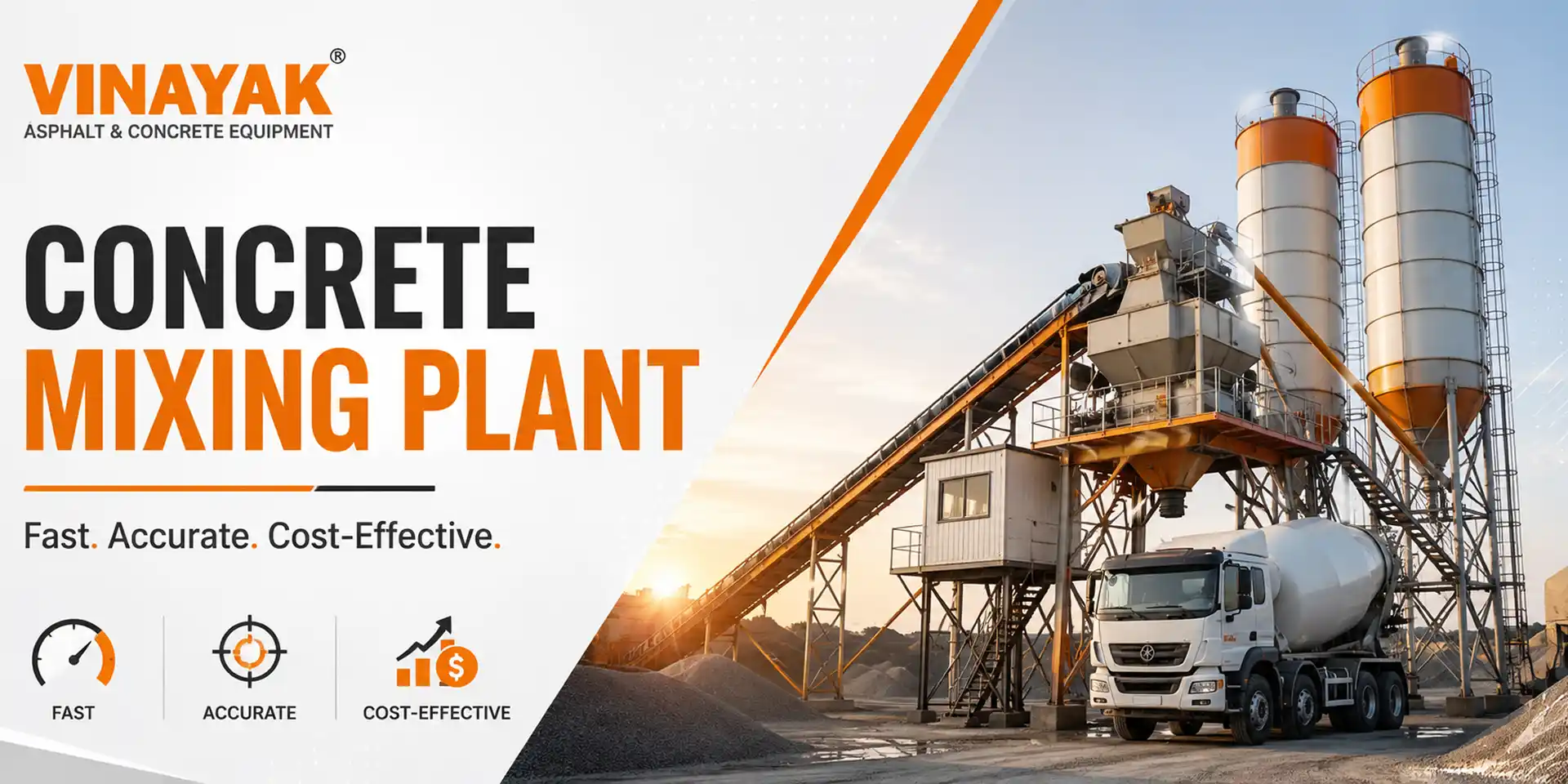
There is no other way but speed, absolute precision and cost management in the development of modern infrastructure. The quality of the foundation is a critical aspect of multi-lane road construction, a high-rise building construction or a remote canal project; it all depends on the consistency of the concrete. Manual mixing or sourcing from unverified suppliers can cause delays, weaken the structure, and cause cost overruns in the project.
As competition increases, project managers look at industrial automation solutions. When investing in a high-efficiency concrete mixing plant, structural engineers have full control over the ratios, output rate and cost of raw materials.
Vinayak Asphalt & Concrete Equipment is one of the leading manufacturers of concrete mixing plants, and they create equipment that is specifically tailored to the challenges that are faced on-site. This article examines how batching technology is being used today to achieve speed and accuracy at competitive cost.
The Three Pillars of Modern Concrete Production
Achieving profitable structural development requires balancing three critical operational factors: speed, accuracy, and cost-effectiveness. When one factor fails, the entire project timeline is put at risk.
1. High-Velocity Production (Speed)
In fast-paced construction, downtime kills profitability. A modern plant utilizes synchronized aggregate bins, high-speed conveyor belts, and automated twin-shaft mixers to cut cycle times to a minimum.
Instead of waiting for transit mixers to arrive from off-site suppliers, an on-site installation delivers fresh mixes on demand. This keeps slip form pavers and concrete pumps running continuously, allowing contractors to hit aggressive deadlines.
2. Micro-Precision Batching (Accuracy)
Structural integrity cannot rely on guesswork. High-performance concrete requires precise weight distributions of water, cement, fly ash, admixtures, and aggregates.
Modern plants feature load-cell sensors paired with centralized PLC (Programmable Logic Controller) control panels. These systems automatically compensate for moisture variance in raw sand and aggregate, ensuring every cubic meter of output matches the exact target recipe.
3. Smart Resource Management (Cost-Effectiveness)
Raw materials are the highest single continuous cost in the manufacture of concrete. The material wastage when prepared in manual batching is estimated between 5% to 8% due to spillage, over-ordering or rejected out of specification batches.
Automation helps reduce human error, helping to track each and every ounce of inventory and only use what the formula requires. In addition, you save on third-party margins and on costly transiting of concrete, which can happen over long distances.
Choosing Your Configuration: Stationary vs. Mobile
Each construction site has its own set of requirements. The logistics for a major highway project, across hundreds of kilometres, are very different to those of a small, concentrated urban construction site.
The solution is to use special engineering equipment to accommodate two different equipment layouts:
| Feature | Stationary Concrete Plants | Mobile Concrete Batching Plants |
|---|---|---|
| Best Used For | Long-term commercial production, mega infrastructure, and ready-mix suppliers. | Linear projects (highways, canals, railways), short-term remote sites. |
| Foundation Requirement | Heavy concrete foundations required. | Minimal civil foundations; often fits on a compact footprint. |
| Mobility | Fixed location; permanent installation. | Towable chassis design; quick assembly and teardown within days. |
| Production Volume | Typically optimized for high-volume, continuous daily output. | Tailored for immediate on-site utilization to minimize transport wear. |
An agile mobile concrete batching plant reduces haulage distances and thus prevents the concrete from setting before it gets to the worksite. For high activity or temporary projects, it also saves on hauling distances.
Engineered for Global Reliability
The machinery used should be of high quality and be capable of working under extreme conditions. This equipment designed by global suppliers is designed to withstand dusty aggregates, extreme temperatures and two shifts a day.
A leading exporter of concrete mixing plants, Vinayak Construction Equipment has rugged machines in over 35 countries, including the infrastructure markets in Kenya, Nigeria, Oman, UAE and Sri Lanka. These systems are engineered using high-quality, durable plates and components that are recognized worldwide, with emphasis on ease of maintenance in the field and high availability.
Frequently Asked Questions
Conclusion
To make infrastructure development more profitable, old and inefficient mixing methods should be phased out. An automated concrete mixing plant provides complete control of production speed, structural accuracy and production costs. By collaborating with a reputable, industry-leading concrete mixing plant manufacturer such as Vinayak Asphalt & Concrete Equipment, your site will benefit from high-durability engineering, reduced installation friction and reliable aftermarket support that will ensure your projects are completed on time.


.png)