

Mobile Concrete Mixer: A Practical Solution for On-Site Concrete Mixing
Projects are typically characterized by multiple sites, complex timeframes and evolving site conditions. Delivering concrete to the right place at the right time can be difficult, especially for road construction, rural infrastructure, and projects that are away from traditional concrete batching plants. By bringing concrete mixing closer to the jobsite, a Mobile Concrete Mixer can help contractors meet these requirements.
Mobile mixing can be a valuable solution to contractors involved in highways, commercial and infrastructure projects, in terms of availability and site operations. Depending on the size of the project, the amount of production that is needed, site accessibility, and the amount of production control desired, the appropriate equipment will be chosen.
What Is a Mobile Concrete Mixer?
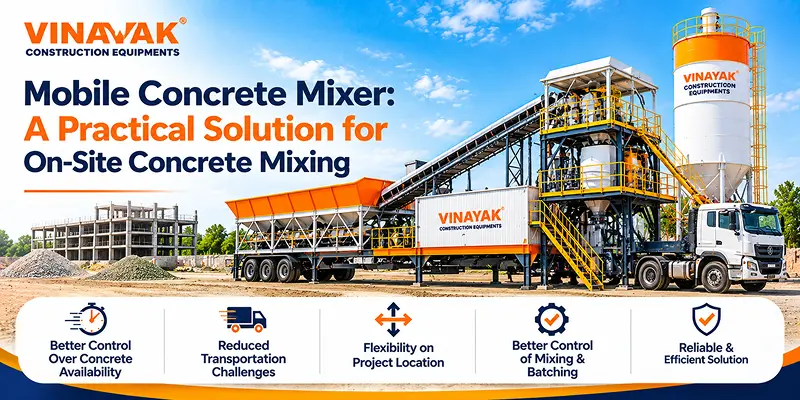
A mobile concrete mixer is concrete mixing equipment that is used to support concrete mixing at or near construction sites. Depending on the configuration, it can be installed on a mobile batching plant or set up on a transportable plant. These systems enable contractors to transfer equipment from site to site and produce concrete as per project specifications.
The mobile concrete batching plant can integrate the storage and weighing systems, cement feeding system, water measuring system and mixer in a coordinated setting. For example, Vinayak Equipments offers mobile concrete batching plant solutions with PLC-based controls and twin-shaft mixing options, depending on the selected model.
Why Is On-Site Concrete Mixing Useful?
- 1. Better Control Over Concrete Availability
Concrete placement may be in a planned sequence. Delays in concrete supply can interrupt work, especially on road projects and large sites spread over multiple locations. On-site mixing also helps teams coordinate production with their construction schedule.
This is helpful when the work is done in stages, and needs to be adapted as the day goes on. Batches can be scheduled according to the sequence of the work, and contractors can minimize the unnecessary waiting time. - 2. Reduced Transportation Challenges
Freshly mixed concrete may cause scheduling problems when being transported over long distances. Concrete can come to the site at different times, and may not be workable due to traffic, road conditions, and travel time.
Depending on the design of the equipment, a mobile concrete mixer or mobile batching setup can be utilized to take production nearer to the point of use. This can shorten the distance concrete has to be delivered after mixing and it can ease the concerns of contractors regarding delivery. - 3. Flexibility on Project Location
The linear nature of road construction, canal development, rural roads and other linear infrastructure projects tend to cover vast areas. A fixed batching plant may not be as convenient if the work is no longer at the original production site.
Mobile equipment may be moved as required by the project, depending on the transportation, installation and site preparation requirements. This flexibility can assist contractors in scheduling equipment use based on the phase of the project and not just a single permanent site. - 4. Better Control of Mixing & Batching
The quality of concrete relies upon the accuracy of the proportions of the materials, the correct mixing of concrete and consistent operating procedures. Today, mobile batching plants can be equipped with electronic load cells and automated controls to measure aggregates, cement, water and additives.
These systems aid the operator to maintain the proper mix proportions with more consistency. Proper calibration, material quality, routine maintenance and trained operators are still critical to obtaining the quality of concrete that is specified.
Mobile Concrete Mixing Equipment Applications
Mobile concrete mixing solutions are suitable for several construction environments, depending on their capacity and configuration.
- Road and highway construction: Provides concrete needs at various construction sites.
- Rural infrastructure: Assists with locations that may lack existing batching plants.
- Commercial/industrial building: Allows for concrete production planning for structures, such as foundations, flooring, etc.
- Canal and infrastructure projects: Gives flexibility in the construction process when projects are developed over long areas.
- Remote construction sites: May lessen reliance on offsite concrete batch plants where feasible.
Prior to equipment selection, contractors should evaluate the anticipated volume of concrete to be mixed, the mix specification they need, space available, power supply, and access to the site for moving the equipment.
How to Choose the Right Equipment
The first step is to determine the estimated number of cubic metres of concrete needed for each phase of each project and the rate at which it will be used per hour. Look at plant rated output, mixer capacity, weighing accuracy, automation capabilities and installation requirements. Actual production is subject to variations in material handling, site conditions, mix design and operational efficiency.
Also check out the availability of spare parts, maintenance needs, operator training and after sales technical support. A machine that is suitable for the production requirements and operating conditions of the project will be more useful in terms of its working life.
Conclusion
A mobile concrete mixing solution can be the answer to construction teams' challenges in regulating concrete availability, minimizing transportation issues and adjusting to the changing worksites. The selection is determined by production needs, site conditions and the operational costs for the long term. Vinayak Equipments offers mobile concrete batching plants for infrastructure and construction projects. For more information about the options available, visit vinayakequipments.com and reach out to the team to discuss equipment that meets your project needs.


.png)