

Mobile Concrete Mixer vs. Stationary Mixer: Which One Should You Choose?
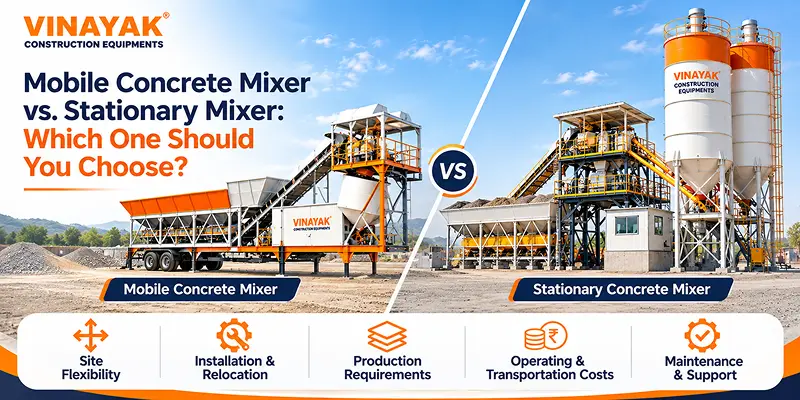
Not all construction operations are identical. While some might call for concrete to be mixed in one particular spot for months at end, others might include road work, distant sites, or several locations. This will be able to assist construction firms in better organizing time, manpower, and operational expenses.
The portable concrete mixer would be able to come in handy when there is a need to have the concrete produced to be mobile too. The stationary mixer, on the other hand, can be ideal for projects that will have the mixing done in one particular spot.
What Is a Mobile Concrete Mixer?
A mobile concrete mixer is constructed to allow flexibility while working in a scenario where concrete is needed at different places. This will depend on the machine used. It might either be moved from one site to another or operate in a mobile concrete mixing plant.
It can be used in the construction of roads and in areas that are difficult to access.
Before buying, verify the capabilities of the equipment, the arrangement of production, transportation, and installation. The term mobile may refer to various designs of machines, thus verify with the supplier.
What Is a Stationary Concrete Mixer?
A stationary concrete mixer is a mixer, mounted at a fixed location, for mixing operations that take place at the same location. They can be used in construction sites, production plants, and other locations where concrete needs to be produced on a regular basis.
As the equipment does not require movement frequently, contractors are able to establish an operating base for all the activities involving material storage, loading, mixing, and transportation.
There are various factors that required the ideal arrangement such as production capacity, time frame of the job, and space availability.
Mobile vs. Stationary Mixer: Key Differences
- 1. Site Flexibility
Mobility is the biggest benefit of the mobile system. This could prove to be beneficial in cases where construction operations move from one area to another, or where a contractor works on multiple sites.
A stationary mixer is more suitable when the production area remains fixed. It can be integrated into a planned site layout with dedicated space for raw materials and equipment. - 2. Installation and Relocation
Mobile equipment is designed with transportation and movement in mind; the amount of time needed will depend on the model and site conditions.
Installation of a fixed plant would take more planning, but once installed, it could provide production capabilities without needing to be moved.
It is always important to determine the requirements for installation, dismantling, and transportation before purchasing equipment. - 3. Production Requirements
The decision should not be influenced by mobility alone. The contractors should look at the production capacity of the equipment, its mixing system, and the compatibility with the concrete to be used.
Some mobile systems are meant to operate in a flexible manner in the site, while others are stationary but can be obtained in different designs to cater to production purposes. - 4. Operating and Transportation Costs
A mobile system may reduce the need to transport concrete over long distances when production can be brought closer to the worksite. However, relocation and transportation of the equipment itself also involve costs.
The stationary mixer would be more suitable for the continuous production of concrete at one point. One must consider the cost associated with installation, fuel or electricity, labor, maintenance, material handling, and delivery charges when assessing the total cost. - 5. Maintenance and Support
Both kinds of mixers will need routine inspections, cleaning, and maintenance. The mixing machine, weighing system, control systems, and other equipment will need maintenance as per the manufacturer's specifications.
One needs to examine the availability of replacement parts and access to technicians before purchasing any machine.
Which Mixer Is Right for Your Project?
Select a mobile system in case your project requires mobility, remote sites, or constant relocation. This will be beneficial when you have to have flexible concrete manufacturing in your construction program.
If you need constant production from one single fixed point and have proper space to install the equipment, select a stationary plant.
Make sure that you know your requirements and make estimates before you make your decision.
Mobile Concrete Solutions from Vinayak
Vinayak Construction Equipments provides mobile as well as fixed concrete mixing plants that can be customized to meet various construction requirements. Customers may compare the available models on the basis of the capacity of the machinery and other installation-related factors.
When choosing a mobile concrete mixer, one should ask the company selling the machine about its operation process, logistics, and technical specifications.
Conclusion
A mobile concrete mixer provides convenience for shifting from one place to another, whereas a fixed mixer is appropriate for those who want a fixed manufacturing facility. The choice will depend on the length of the project, amount of concrete required, operational costs, and other factors. Need assistance in choosing concrete mixing equipment? Get in touch with Vinayak Construction Equipments today to know more about your project needs and the options available to you.


.png)