

Asphalt Plant Components: Understanding the Systems Behind Efficient Asphalt Production
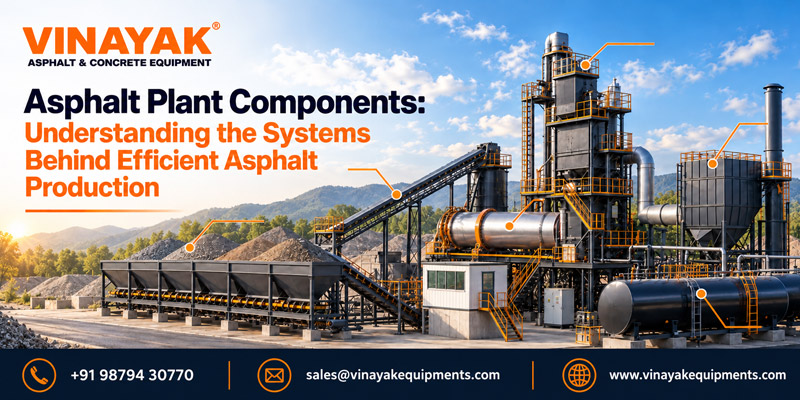
A good road starts with good materials, but producing a consistent asphalt mix requires more than just aggregates and bitumen. Several machines and systems work together inside an asphalt plant to heat, dry, weigh, mix, and deliver the finished material.
Understanding the main Asphalt Plant Components can help contractors make better equipment decisions and understand where each part fits into the overall production process. From the cold feeder unit to the control system, every component has a specific role in maintaining smooth and reliable asphalt production.
What Are the Main Asphalt Plant Components?
An asphalt plant is made up of several interconnected systems. While the exact arrangement can vary between drum mix and batch mix plants, the basic purpose remains the same: prepare aggregates, combine them with bitumen and other materials, and produce a consistent asphalt mix.
Some of the major components include:
- Cold Feeder Unit
The process generally begins with the cold feeder unit. It stores and feeds different sizes of aggregates into the production line at a controlled rate. Proper feeding is important because an inconsistent supply can affect the final mix.
Vinayak's asphalt plants use multiple cold feed bins, with conveyor arrangements designed to transfer aggregates towards the drying section. - Dryer Drum and Burner
Aggregates contain moisture, so they need to be dried and heated before mixing. The dryer drum rotates the material while the burner supplies the required heat.
The burner and drying system therefore play an important role in preparing aggregates for proper mixing with bitumen. Vinayak's drum mix plants use thermo-drum units with automatic burners for this stage. - Bitumen Storage and Heating System
Bitumen needs to remain at a suitable temperature so that it can be pumped and mixed properly. The bitumen tank stores the material and includes a heating arrangement to maintain the required temperature.
Depending on the plant configuration, additional heating equipment such as thermic oil heaters can also be included. - Mixing Unit
The mixing section brings the heated aggregates, bitumen, and other required materials together. In a batch mix plant, accurately weighed materials are transferred into the mixer for each batch.
Vinayak's batch mix plants use twin-shaft, hot-oil-jacketed pugmill mixing units, with different batch capacities available across its range. - Pollution Control System
Dust management is another important part of modern asphalt production. Pollution control equipment helps collect dust generated during aggregate handling and heating.
Depending on the plant design, systems can include cyclone collectors, wet dust collectors, or bag house filters. Vinayak offers dual-stage pollution control arrangements and bag house filtration options for its asphalt plants. - Control Panel and Control Cabin
The control system brings the different plant operations together. Operators can monitor production and manage functions such as feeding, heating, mixing, and plant operation from the control cabin.
Vinayak's systems include PLC/SCADA-based controls, while its batch plants also offer computerised controls with manual override facilities.
Why Component Quality Matters
An asphalt plant works as a complete system. If one component performs poorly, it can affect other stages of production as well. A weak feeding system can disturb material flow, while inefficient heating can affect aggregate preparation.
For this reason, contractors should consider component quality, plant capacity, maintenance requirements, fuel efficiency, automation, and after-sales support when selecting equipment.
Asphalt Plant Solutions from Vinayak Construction Equipments
Vinayak Construction Equipments offers both asphalt drum mix and asphalt batch mix plants for road and civil construction applications. Its equipment range includes cold feeder units, thermo-drum systems, bitumen tanks, filler systems, control systems, pollution control equipment, and other supporting components.
With different configurations available, the plant can be selected according to production capacity and project requirements.
Conclusion
Knowing about the various Asphalt Plant Components, it becomes easy to analyze the entire plant instead of just going for the capacity and cost of the equipment. Every system, starting from the Aggregate Feeding & Drying to the Mixing and Control systems, plays its role in providing a consistent output of asphalt. In case you wish to set up or upgrade your asphalt plant, do approach Vinayak Construction Equipments.


.png)